After a storm in Monroe, homeowners face the same damaged trees but very different response choices. Do you clear everything yourself, hire a crew for the hazardous parts only, or bring in professionals for the whole job? The right answer depends on where the wood is, what it is touching, and how it is loaded with tension. Comparing the options honestly, side by side, is safer than deciding by confidence alone.
Summer thunderstorms in Union County drop limbs every year, and fall storms can take whole trees. The comparison below assumes the storm has passed and no one is hurt. If a line is down, a tree is on a structure with people inside, or you smell gas, emergency services and the utility come before any tree decision at all.
| Situation | Reasonable to handle yourself | Better handled by a crew | Why the line sits there |
|---|---|---|---|
| Small branches on open ground | Yes, with basic tools and care | Not usually needed | Wood is on the ground, untensioned, and clear of structures |
| Large trunk sections on the ground | Only with chainsaw experience | Often yes | Big wood binds saws, rolls, and hides tension that releases suddenly |
| Hanging broken limbs in the canopy | No | Yes, always | Hangers fall unpredictably and need rigging from above |
| Tree leaning on a roof or fence | No | Yes | The structure and tree load each other; wrong cuts shift both |
| Split trunk still standing | No | Yes | Splits can close, roll, or fail while being worked |
| Any wood touching power lines | No | Utility first, then crew | Energized lines make the tree and ground around it dangerous |
| Uprooted tree with root plate lifted | No for the trunk work | Yes | Root plates can slam back when trunk weight is cut away |
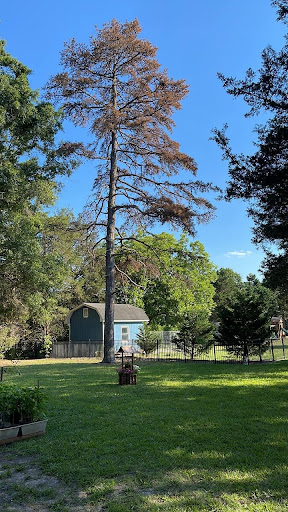
Documentation fits into every option
Whichever route you choose, photograph the damage before moving wood: the tree in place, damage to roofs, fences, and vehicles, and any uprooted root plate. Note the date and time. Insurers build claims on that record, and neighbors whose trees or fences are involved will ask the same questions. Keep receipts for emergency work. If you do your own ground cleanup, leave the hazardous pieces untouched and marked rather than partially cut, because a half cut hanger is more dangerous than an untouched one, and a crew such as Mike's Tree Service can read an untouched failure more accurately than a modified one.
The first week after the storm
Once hazards are down, the remaining choices are about the survivors. Torn limbs need clean pruning cuts at the branch collar, not flush cuts or stubs, so the tree can seal the wound. Trees that leaned and stayed leaning need an assessment of roots and soil on the lifted side. Young trees that were pushed over can sometimes be straightened and staked if roots are intact and the tree is small. Large trees cannot. Water survivors during dry weeks after the storm, because root damage reduces what they can take up even when soil moisture looks adequate from the surface.
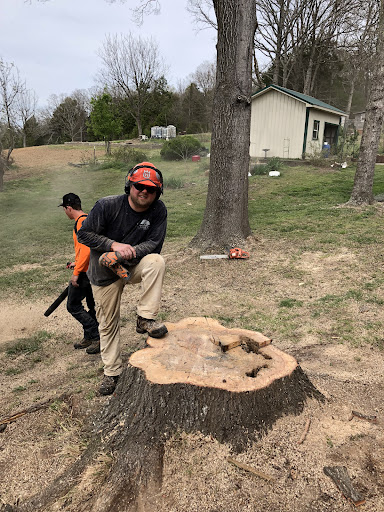
Deciding what the comparison really shows
The pattern in the table is simple: ground level, small, and untensioned is homeowner territory; high up, large, tensioned, or touching anything else is professional territory. Most Monroe properties after a real storm contain both categories, which is why the hybrid option, crew for hazards and homeowner for ground litter, is the most common outcome. Price the decision in risk as well as effort. The pieces that look almost manageable are statistically the ones that injure people, because a limb under tension stores energy like a spring, and releasing it in the wrong order is a skill, not a strength test.
Safety gear and limits for the work you do take on
For ground cleanup, wear eye protection, gloves, sturdy boots, and hearing protection around saws, and never work alone on anything larger than small branches. Keep bystanders and pets well back, plan an exit path before each cut, and stop when you are tired, because storm cleanup injuries often happen late in a long day. If a trunk is under tension, if a saw keeps binding, or if you cannot predict where a piece will move when cut, that is information: the job has crossed into crew territory, and the right move is to set the saw down and make the call.
Common questions
Can I cut up a fallen tree in my yard myself?
Small to moderate wood lying flat on open ground is the usual homeowner range, if you have chainsaw experience and protective gear. Anything hung up, leaning, or touching a structure belongs to a crew.
What should I do first after storm damage?
Check for injuries and downed lines, keep clear of hangers, photograph everything, then call the utility for line issues and a tree crew for hazards. Cleanup comes after those steps.
Will insurance cover tree removal after a storm?
Coverage commonly depends on whether the tree damaged a structure and on your specific policy. Photographs, invoices, and an early call to your insurer give you the clearest answer for your case.
← All guides from Mike's Tree Service← Back to Mike's Tree Service