A lightning strike on a tree in Monroe rarely looks like the movies. Sometimes there is a dramatic strip of bark blown down the trunk. Sometimes the only sign is a tree that leafs out weakly the next spring and declines over two summers. Lightning injures trees along a spectrum, and the calendar below spreads the response across a full year: immediate safety, early assessment, a season of monitoring, and a decision point that honest observation, not hope, should drive.
Summer thunderstorms are the usual source in Union County, and tall isolated trees, trees on high ground, and trees near water are struck more often. If a struck tree is near lines or structures and shows major splits, treat it like storm damage and keep clear until it is assessed.
| When | What to check | What it tells you |
|---|---|---|
| Immediately | Bark strips, blown out bark at the base, splits, burning smell, line or structure involvement | Obvious severe strikes show at once and may need prompt hazard removal |
| First two weeks | Wilting or scorch on one side of the canopy, leaf drop out of season | Side specific decline maps to damaged conductive tissue under the bark |
| First three months | Bark loosening along a strip, wood cracking as it dries, insect activity in damaged wood | The strip of killed tissue becomes visible as it dries and separates |
| Next spring | How fully the tree leafs out, tip dieback, epicormic sprouts along the trunk | Spring flush is the fairest test of how much living system remains |
| Six to twelve months | Whether decline has stabilized, fungal growth on damaged sections, new lean or root signs | Stabilized trees can be monitored or pruned; progressing decline points to removal |
| Year two | Canopy density compared with photos from year one | Delayed decline is common after lightning, so the second season often settles the decision |
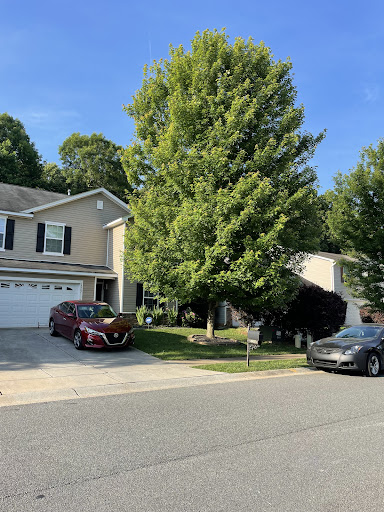
What lightning does inside a tree
The electrical path travels through the moist tissue just under the bark, heating it fast enough in severe strikes to turn sap to steam and blow bark off in strips. Roots can be killed on one side or throughout, which is why a tree with a green canopy in July can still be mortally injured below ground. Because the damage is partly hidden, prognosis right after a strike is genuinely uncertain. Experienced crews such as Mike's Tree Service will often recommend monitoring a valuable tree through the next spring rather than removing or declaring it saved on the day, while being direct about trees where the trunk is split or the root damage is clearly extensive.
Care during the monitoring year
Water the tree during dry spells, because a damaged root system takes up less. Keep mulch wide and flat, avoid wound paint and aggressive pruning, and remove only clearly dead or hazardous wood at first. Photograph the canopy monthly from the same spot so slow change becomes visible. Watch for opportunistic problems: borers and decay fungi favor stressed wood, and their arrival is information, not a separate disaster. If the tree stands over a house, driveway, or play area, weigh the monitoring plan against what it could hit, and shorten the timeline accordingly. Sentiment keeps trees; targets should decide how long a doubtful one gets.
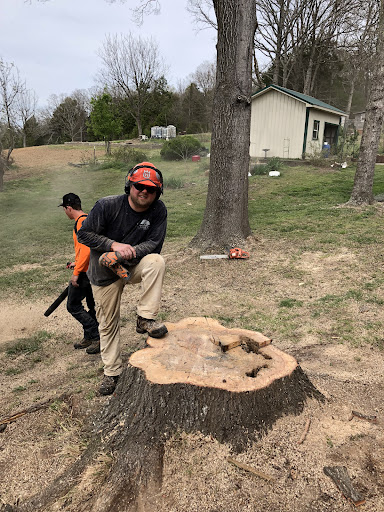
Lightning protection for exceptional trees
For a truly valuable, tall, or historically important tree near a house, lightning protection systems exist: a conductor run from the top of the tree down to a ground system, installed to arborist standards and inspected periodically. They are not a casual purchase and they do not guarantee a tree survives a direct strike, but for the one irreplaceable oak shading a historic home they can be a rational consideration. Most Monroe homeowners will instead spend on the monitoring year, good watering, and prompt assessment, which together answer the practical question of whether this particular struck tree remains an asset or becomes a risk.
Common questions
How can I tell if lightning struck my tree?
Look for a strip of missing or loosened bark running down the trunk, sometimes to blown out soil at the base, followed by decline on one side. Some strikes leave subtle signs and declare themselves through decline instead.
Will a lightning struck tree recover?
Some do, especially where damage is limited to a narrow strip and roots are largely intact. Recovery is judged over the following spring and second season, not in the first weeks.
Should I remove a struck tree near my house right away?
If it is split, leaning, or over a high use area, prompt professional assessment is wise and removal may be immediate. Sound but injured trees in lower risk spots can often be monitored on a set schedule.
← All guides from Mike's Tree Service← Back to Mike's Tree Service